Why Missed Calls Cost Service Businesses Customers, and How to Stop Them
Most missed calls are not after-hours calls; they ring out during a busy afternoon. Here is how to find yours in the phone reports and close each gap.
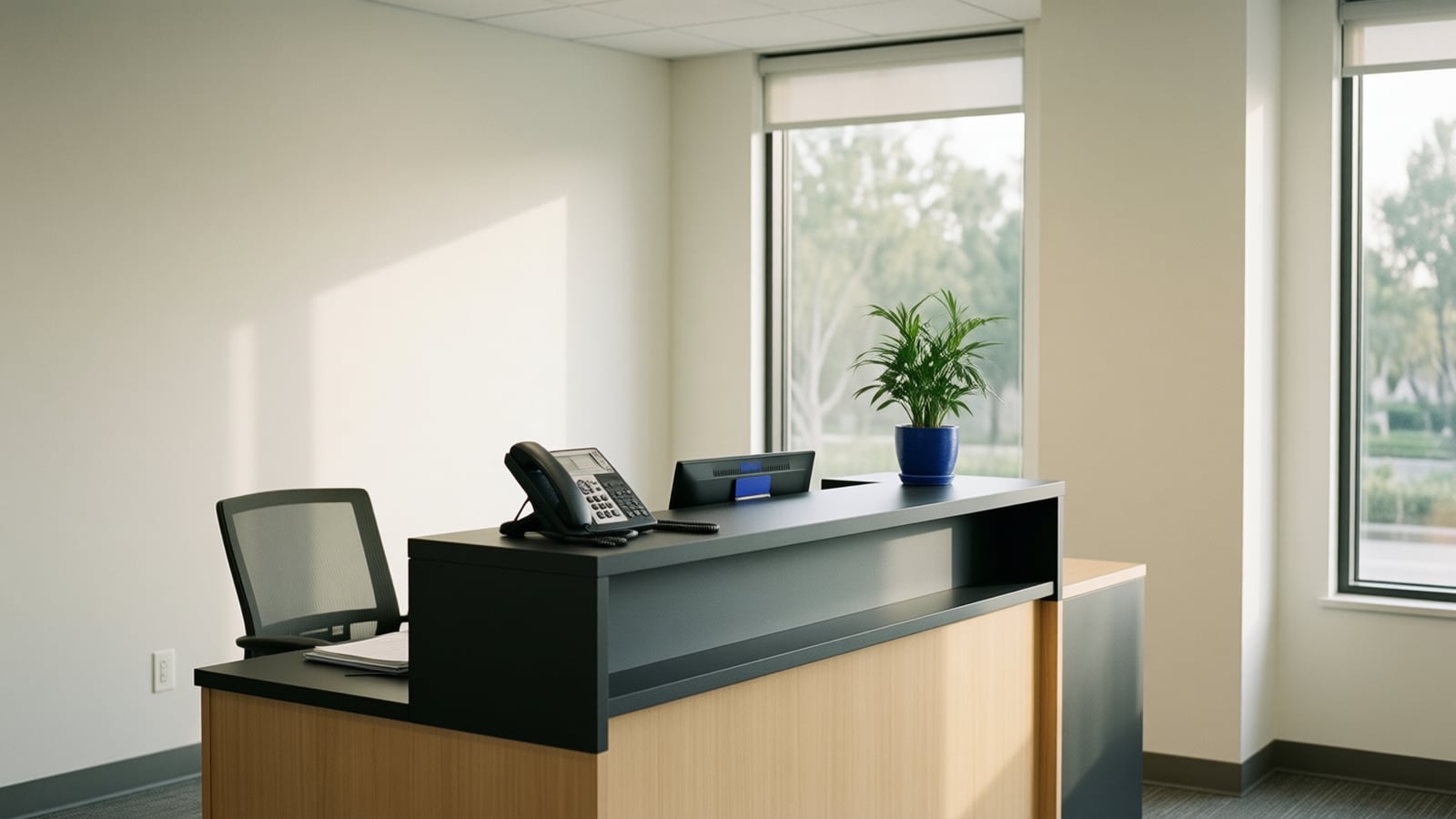
Service businesses lose customers to missed calls because a caller who cannot reach you usually calls the next business on the list instead of waiting. Most missed calls happen during busy hours, not after closing. This guide shows where the gaps come from, how to measure them in your phone reports, and five fixes in order of cost.
Why does a missed call cost more than one conversation?
A missed call from an existing customer is an inconvenience. A missed call from a new prospect is often a lost customer, because that person is usually comparing several options and the first business to answer has the advantage.
Speed matters even when the inquiry arrives by another route. Research published in the Harvard Business Review on the short life of online sales leads found that most companies were not responding to inquiries nearly fast enough. A phone call is the most time-sensitive version of the same problem: the caller wanted to talk now.
The cost also compounds. The person who reached voicemail rarely tells you they went elsewhere, so the loss never appears in a report unless you look for it. For a quick estimate of what your own volume could mean in revenue, run your numbers through our missed call cost calculator.
What counts as a missed call?
Missed call: any inbound call that ends without the caller reaching a person or a system that can resolve their request. That includes calls that ring out, calls abandoned while waiting in a queue, calls that bounce off an unanswered extension and calls sent to a voicemail box the caller hangs up on.
The definition matters because phone systems count these separately. Nextiva's call center report, for example, lists abandoned calls, calls that timed out of the queue and overflowed, calls that bounced after ringing an agent, and calls stranded with no agent signed in. None of them is labelled "missed," yet every one is a caller who did not get help.
Where do missed calls actually come from?
When an Orange County service business pulls its call reports, the misses usually fall into five patterns:
- Peak-hour collisions. Mornings, Mondays and the hour after lunch bring more calls than the people available to answer them.
- One person, two jobs. The front desk is checking a patient in, ringing up a sale or on another line.
- Gaps in coverage. Lunch breaks, staff meetings, sick days and the half hour before opening.
- Routing that dead-ends. A ring group that rings forever, an auto-attendant option that goes to an empty extension, or a queue with no overflow rule.
- After hours and weekends. Real, but often smaller than owners assume.
The after-hours problem gets most of the attention, and we cover it in detail in our guide to after-hours call handling options. The daytime gaps are the ones most businesses have not measured.
How do you measure your missed calls?
Use the phone system's reports, not the call history on a single handset. A handset only shows what rang that phone.
- Find the right reports. In a cloud phone system, look for abandoned call, queue, unanswered or missed call reports. Yeastar, as of October 2026, offers an Unreturned Missed Call Report that lists missed inbound calls with their call-back status, which is exactly the view you want.
- Pull two ordinary weeks. Avoid holidays and unusual promotions so the pattern is representative.
- Group the misses by hour and by day. A spike at 9 a.m. or 1 p.m. is a staffing or routing issue; a spike at 6 p.m. is an after-hours issue.
- Separate new callers from known ones. Match numbers against your CRM. A missed new number is the expensive kind.
- Check whether each miss was returned, and how fast. If nobody owns the missed-call list, the honest answer is often "eventually."
- Write down one baseline number. Missed calls as a share of inbound calls, by business hours and after hours. You will measure every fix against it.
If your system cannot produce these reports, that is a finding in itself. An older on-premise PBX often cannot, which is one of the practical reasons to consider a cloud phone system.
What are the options for catching missed calls?
There is no single fix. Each option closes a different gap, and most businesses end up combining two or three.
| Option | Gap it closes | What the caller gets | Main limitation |
|---|---|---|---|
| Voicemail | Any unanswered call | A recorded greeting and a beep | Many callers hang up instead of leaving a message |
| Ring group and overflow rules | Peak-hour collisions, unattended desks | A second person or team picks up | Only helps if someone else is free |
| Call-back from a missed-call list | Calls that still slip through | A return call, sometimes hours later | Depends on one owner doing it every day |
| Live answering service | Overflow and after hours | A person who takes a message | Usually cannot see your calendar or systems |
| AI voice agent | Overflow, lunch, after hours | Questions answered, appointment booked | Must hand anything outside its rules to a person |
Overflow rules you already pay for
Many businesses own the routing features they need and have never configured them. Nextiva's call center routing policies let you trigger overflow after a caller has waited a set number of seconds or when the queue is full, then send the call to voicemail, transfer it to another number or extension, or keep it ringing. Choosing the right destination is the decision that matters, and "keep ringing" is rarely it.
Where an AI voice agent fits
An AI voice agent, one of the AI-native solutions we deploy, is most useful as the overflow destination. When every person is busy, the call goes to an agent that answers in natural speech, handles the routine questions, books the appointment and passes urgent or complicated calls to a person with a summary attached. Your staff still take the conversations that need judgment. The agent makes sure the remaining calls do not ring out.
It does not replace good staffing, and it should not be the only path. Every agent needs a clear rule for emergencies and a tested route to a person.
How do you stop missed calls, step by step?
Work through the fixes in order of cost. Each step is cheaper and faster than the one after it.
- Measure the baseline using the reports described above.
- Fix routing dead-ends. Remove auto-attendant options that lead nowhere, put a ring timeout on every group and set an overflow destination on every queue.
- Add a second ring. After a set number of rings, ring a backup group: the office manager, sales, or a second location.
- Assign the missed-call list. One named person works it every morning and after lunch, and marks each call returned.
- Cover the predictable gaps. Send lunch hours, staff meetings and after-hours calls to an answering service or an AI voice agent such as Donya.
- Re-measure after a month. Compare against the baseline and adjust the rule that is still leaking.
What should you check before recording or calling back?
Two legal points apply to every fix above. This is not legal advice; confirm the details with your attorney.
First, recording. California generally requires the consent of all parties to record a confidential communication under Penal Code section 632. If an AI agent or an answering service records or transcribes calls, play a clear notice at the very start. Our call recording notice generator drafts one.
Second, outbound calls. The FCC confirmed in a February 2024 declaratory ruling that AI-generated voices count as "artificial or prerecorded voice" under the Telephone Consumer Protection Act, so AI calls to consumers generally need prior express consent. Keep AI on inbound calls and let a person make the call-backs until you have a consent process.
Key takeaways
- A missed call from a new prospect is usually a lost customer, not a delayed one.
- Most missed calls happen during business hours, not after closing.
- Measure first: abandoned, bounced, overflowed and unreturned calls, grouped by hour.
- Fix routing dead-ends and overflow rules before buying anything new.
- Use an answering service or an AI voice agent for the predictable gaps, with a tested path to a person.
- Record only with a clear notice, and keep AI calling inbound until consent is documented.
How Telxpress helps
Telxpress is an Irvine business solutions provider and AI advisor. We pull your call reports, find where calls are being lost, fix the routing on the phone system you already have or move you to a cloud platform such as Nextiva or Yeastar, and deploy Donya, our AI voice agent, as the overflow and after-hours answer, with 24/7 support from a local team. Start with the free AI readiness assessment to see where calls fit among your other opportunities.
Questions
Questions this article answers
How do I find out how many calls my business misses?
Open the reports in your phone system rather than the call log on one handset. Look for abandoned calls, calls that rang an extension without an answer, calls that timed out of a queue and calls that went to voicemail. Pull two normal weeks, group them by hour of the day, and the pattern usually becomes obvious.
Is voicemail good enough for a small service business?
It is a safety net, not a plan. Many callers hang up rather than leave a message, especially new prospects comparing several businesses. Voicemail works best for existing customers who know you will call back. For first-time callers, a live person or an AI voice agent that can answer questions and book is far more likely to keep them.
Do most missed calls happen after hours?
Often not. In many service businesses the bigger share happens during business hours, when every line is busy, the front desk is with a customer, or the team is at lunch. Your own phone reports will show which is true for you. Fixing the daytime overflow gap first usually recovers more calls than an after-hours service alone.
Can an AI voice agent call back the people we missed?
Be careful. Federal rules treat AI-generated voices as artificial voices, so outbound calls to consumers generally need their prior express consent. A safer start is to let the agent answer inbound overflow and after-hours calls, and have a person return the remaining missed calls from a daily list until you have a documented consent process.
What is the cheapest first fix for missed calls?
Change the routing rules you already pay for. Most cloud phone systems let you ring a second group after a set number of rings, send queue overflow to another destination, and report on every unanswered call. Adjusting those settings and assigning one person to work the missed-call list each day costs staff time, not new software.
Keep reading
Related articles
- AI Solutions October 11, 2026
After-Hours Call Handling Options for Service Businesses
Voicemail, a forwarded cell, a live answering service or an AI voice agent: which one fits a clinic, a law firm, a dealership service desk, a nonprofit or a trade, and what California requires if you record.
- AI Solutions October 11, 2026
AI Receptionist Services Compared: What to Look For in 2026
Human virtual receptionists, self-serve AI answering services and an integrator-run AI voice agent, compared on availability, call handling, integration, data, tuning, cost and fit.
- AI Solutions October 9, 2026
AI Receptionist vs Human Receptionist: What Changes for a Small Business
Adding an AI receptionist rarely means losing the front desk; here is how calls, exceptions and costs divide between the AI and the person who still greets your customers.